LiFePO4 Battery and Solid Battery: Which One Should You Choose?
Many clients approach us with confusion about the future of battery technology, particularly regarding the choice between proven LiFePO4 and promising solid-state batteries.
While solid-state batteries offer theoretical advantages in energy density and safety, LiFePO4 batteries currently provide the best balance of cost, reliability, and practical performance for most applications.
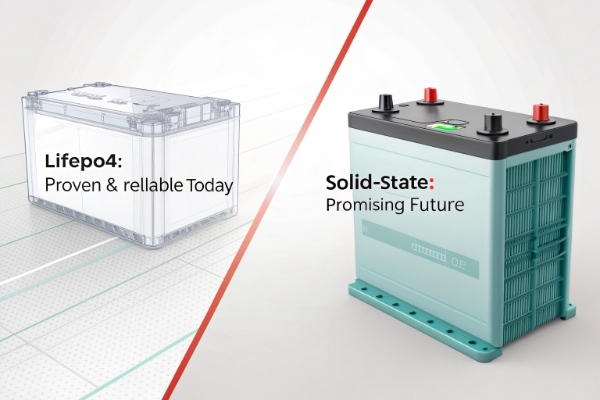
Let's explore the practical implications of choosing between these technologies based on our extensive experience in battery manufacturing and implementation.
Differences Between Solid-State Li-Ion and LiFePO4 Batteries
In our testing laboratory, we've had the opportunity to evaluate both technologies extensively.
The main differences lie in their electrolyte composition, energy density, manufacturing complexity, and cost. Solid-state batteries use solid electrolytes and potentially offer higher energy density, while LiFePO4 uses liquid electrolytes and offers proven reliability.
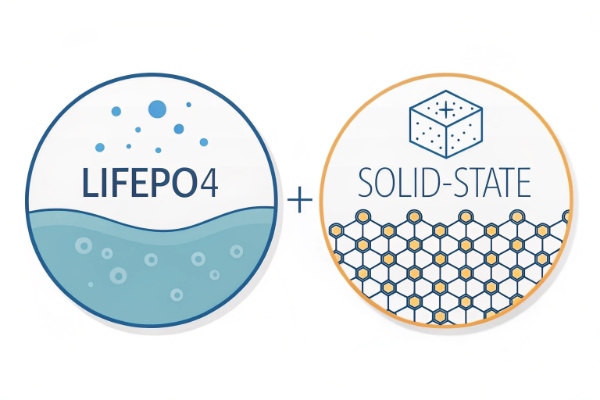
Let's analyze these differences in detail:
Technical Comparison Analysis
- Structure and Materials
- Electrolyte composition
- Electrode materials
- Manufacturing processes
- Material availability
- Supply chain considerations
Through our manufacturing experience, we've observed that LiFePO4 production costs remain relatively stable, while solid-state battery materials1 can cost up to 10 times more. The complex manufacturing processes for solid-state batteries require specialized equipment and ultra-dry environments.
- Performance Metrics
- Energy density
- Power output
- Charging speeds
- Temperature tolerance
- Cycle life
Solid-state batteries promise higher energy density, current prototypes often struggle with power delivery and operating temperature ranges. While LiFePO4 continues to demonstrate reliable performance across various conditions.
- Commercial Viability
- Production scaling
- Cost per kWh
- Manufacturing complexity
- Quality control
- Market readiness
Are Sodium Ion Batteries Better Than LiFePO4?
This question frequently arises as sodium-ion technology gains attention in the energy storage sector.
While sodium-ion batteries show promise for cost reduction and sustainable resource use, they currently don't match LiFePO4's performance in terms of energy density, cycle life, and proven reliability.
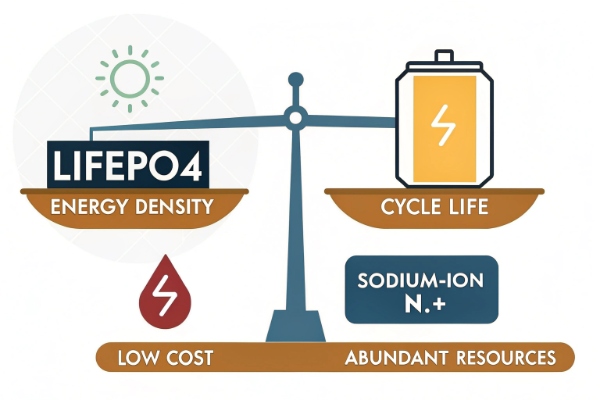
Let's examine the key factors:
Comparative Analysis
- Performance Characteristics
- Energy storage capacity
- Voltage characteristics
- Self-discharge rates
- Temperature performance
- Cycle stability
Our testing reveals that current sodium-ion batteries achieve only 70-80% of LiFePO4's energy density. However, they show promising cost advantages for grid storage applications.
- Resource Considerations
- Raw material availability
- Supply chain stability
- Environmental impact
- Processing requirements
- Recycling potential
Through our supply chain analysis, we've found that sodium's greater abundance could potentially reduce battery costs by 30-40%, though manufacturing infrastructure needs significant development.
What is the Problem with Solid-State Batteries?
Based on our research and development experience, several challenges hinder solid-state battery commercialization.
The main challenges include high manufacturing costs, interface stability issues, low power density at room temperature, and scaling difficulties in production.
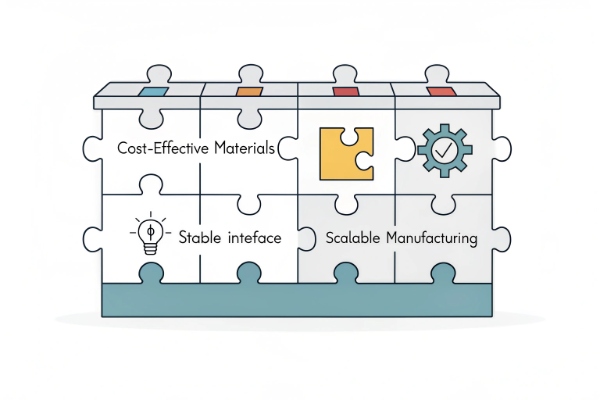
Let's explore these challenges:
Technical Challenges Analysis
- Manufacturing Hurdles
- Production complexity
- Material costs
- Quality control
- Scaling issues
- Process stability
Studies indicate that producing solid-state batteries requires cleanroom conditions 100 times more stringent than traditional battery production, significantly increasing costs.
- Performance Limitations
- Interface resistance
- Temperature sensitivity
- Power delivery
- Cycling stability
- Mechanical stress
Laboratory testing shows that current solid-state batteries often require elevated temperatures (>60°C) for optimal performance, making practical applications challenging.
Are LiFePO4 Batteries the Best?
Drawing from our extensive experience in battery applications, this question requires a nuanced answer.
LiFePO4 batteries excel in safety, longevity, and cost-effectiveness, making them the best choice for many current applications. However, "best" depends on specific use case requirements.
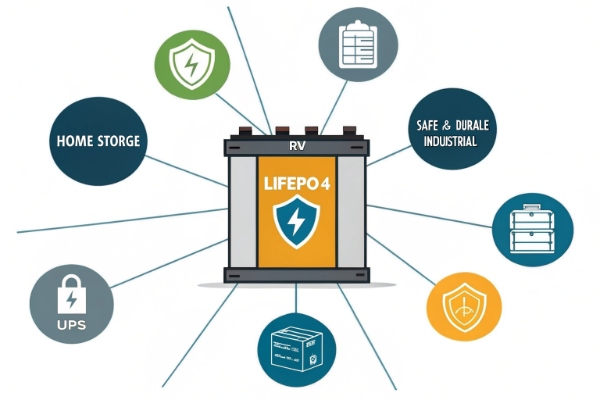
Let's analyze the advantages and limitations:
Application-Specific Analysis
- Strength Areas
- Safety performance
- Cycle life
- Cost effectiveness
- Temperature stability
- Maintenance requirements
Our field data shows that LiFePO4 batteries consistently achieve 3000-7000 cycles in real-world applications, far exceeding many alternatives in similar price ranges.
- Limitation Considerations
- Energy density
- Weight factors
- Initial cost
- Charging speed
- Low-temperature performance
Through comparative testing, we've found that while LiFePO4 batteries have lower energy density1 than some alternatives, their superior safety and longevity often make them the most practical choice.
Conclusion
While solid-state batteries show promise for the future, LiFePO4 batteries currently offer the most practical and reliable solution for most applications. Their proven track record, cost-effectiveness, and established manufacturing processes make them the preferred choice for near-term deployment.