How do LFP Batteries Perform in Cold Weather Conditions?
As winter approaches, many of our customers express concerns about their LFP battery systems' performance in cold weather. This is a critical consideration for reliable operation.
LFP batteries typically show reduced performance in cold weather, with charging capacity significantly decreasing below 0°C (32°F). However, with proper thermal management strategies, they can still function effectively in cold climates.
Understanding cold weather performance is crucial for anyone relying on LFP batteries in regions with seasonal temperature variations. Let's explore the details and solutions.
Are LFP Batteries Good in Cold Weather?
Based on the extensive field testing across different climate zones, this is a nuanced question that deserves careful consideration.
While LFP batteries can operate in cold conditions, their performance is notably impacted below 0°C. They maintain better safety characteristics compared to other lithium chemistries but require proper thermal management for optimal performance.
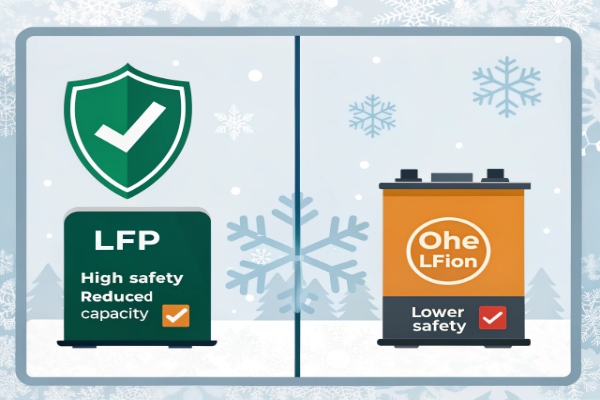
Our implementation experience has revealed several important factors:
Cold Weather Performance Analysis
- Discharge Performance
- Capacity reduction at low temperatures
- Power output limitations
- Voltage stability changes
- Internal resistance increases
- Self-discharge rates
Through our winter field trials, we've observed that unheated LFP batteries typically retain only 70-80% of their rated capacity at 0°C, with further reductions at lower temperatures. However, this capacity loss is temporary and reverses when temperatures rise.
- Safety Considerations
- Structural stability
- Chemical reaction rates
- Internal pressure changes
- Thermal stress management
- Material durability
Despite reduced performance, LFP batteries maintain their inherent safety advantages even in cold conditions, showing no increased risk of thermal runaway1 or structural degradation.
How Does Temperature Affect LFP Battery Performance?
The laboratory testing and real-world deployments have given us deep insights into temperature effects on LFP batteries.
Temperature significantly impacts both charging and discharging capabilities. Performance typically peaks between 20-30°C (68-86°F), with notable degradation below 0°C (32°F) and above 45°C (113°F).
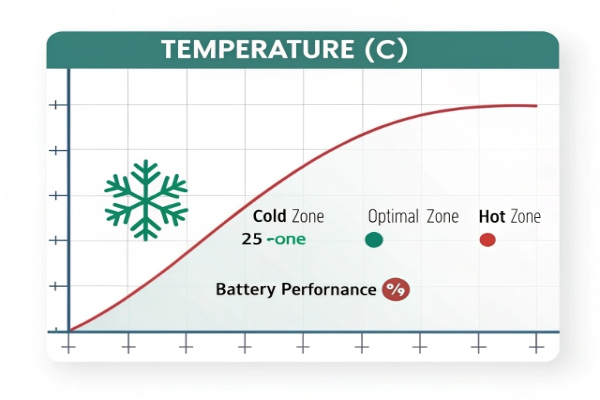
Let's examine the specific temperature impacts:
Temperature Impact Analysis
- Performance Metrics at Different Temperatures
- Charging acceptance rates
- Discharge capacity
- Internal resistance changes
- Cycle life effects
- Recovery characteristics
It reveals that charging capacity can drop by up to 80% at -20°C (-4°F) compared to room temperature performance. However, we've found that proper thermal management systems can significantly mitigate these effects.
- Chemical and Physical Effects
- Electrolyte conductivity
- Ion mobility changes
- Electrode reaction rates
- SEI layer behavior
- Material stress patterns
How Cold is Too Cold to Charge LiFePO4?
Through extensive testing and monitoring of real-world installations, we've identified critical temperature thresholds.
Most manufacturers recommend against charging LFP batteries below 0°C (32°F). Attempting to charge below this temperature can cause permanent damage due to lithium plating on the anode.
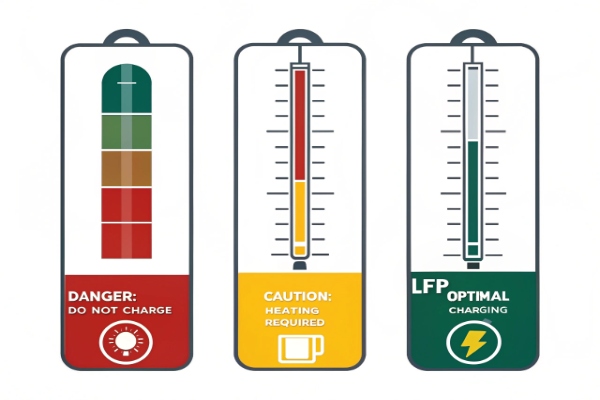
Let's break down the temperature thresholds:
Temperature Threshold Analysis
- Critical Temperature Points
- Minimum safe charging temperature
- Optimal charging range
- Maximum safe temperature
- Recovery temperatures
- Storage conditions
Our data shows that while discharge is possible at lower temperatures, charging should be strictly limited above 0°C to prevent permanent capacity loss and potential safety issues.
- Impact of Charging at Low Temperatures
- Capacity degradation rates
- Structural changes
- Long-term effects
- Recovery potential
- Safety implications
Key Strategies to Use LFP Battery for Cold Weather
Based on our implementation experience across various cold-climate installations, we've developed effective strategies for winter operation.
Successful cold weather operation requires a combination of insulation, heating systems, and smart battery management. Integrated heating elements and thermal enclosures can maintain optimal battery temperature.
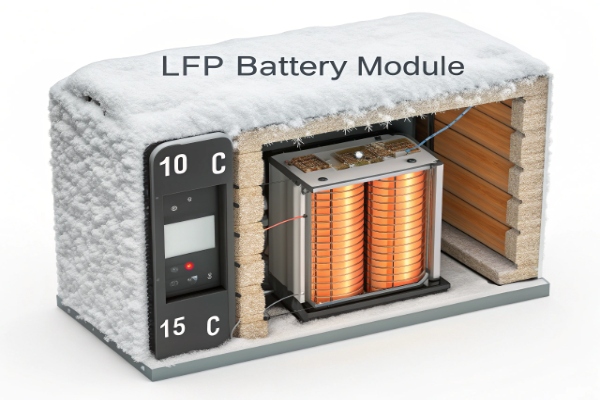
Let's explore proven solutions:
Cold Weather Management Strategies
- Active Thermal Management
- Heating element integration
- Temperature monitoring systems
- Controlled warming cycles
- Power consumption optimization
- Thermal runaway prevention
We've successfully implemented heating systems that activate before charging, ensuring the battery reaches at least 10°C (50°F) for optimal charging performance1.
- Passive Protection Methods
- Insulation techniques
- Thermal mass utilization
- Installation location optimization
- Airflow management
- Weather protection measures
Through careful system design, we've achieved reliable operation in environments as cold as -30°C (-22°F) using these strategies.
Conclusion
While LFP batteries face challenges in cold weather, proper thermal management and protection strategies can ensure reliable performance. The key is implementing appropriate heating solutions and following temperature-based operating protocols.