How Do I Match My Battery Size to My Inverter?
Many of our customers struggle with sizing their battery banks correctly when installing inverter systems. Getting this wrong can lead to poor performance or even system failures.
To properly match your battery to your inverter, the battery capacity should typically be 1.5 to 2 times the inverter's continuous power rating. This ensures adequate power delivery during surge conditions and prevents battery protection mode activation.
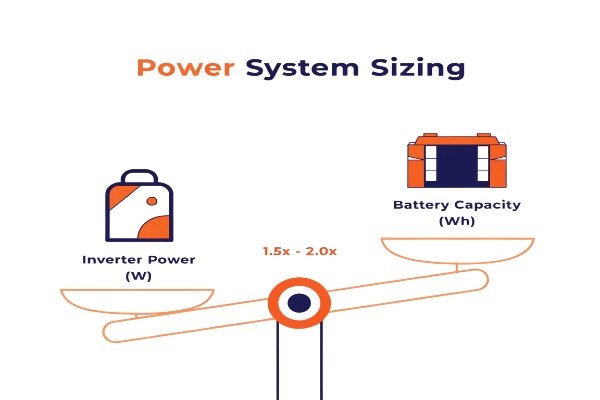
Understanding this relationship is essential for building a reliable off-grid or backup power system. Let's explore the key considerations and calculations.
How to Check Inverter and Battery Compatibility?
Based on our extensive experience with system installations, compatibility involves multiple technical factors beyond just matching numbers.
Inverter and battery compatibility depends on voltage matching, discharge rate capability, and surge power handling. The battery must supply sufficient current without triggering protection systems during inverter peak loads.
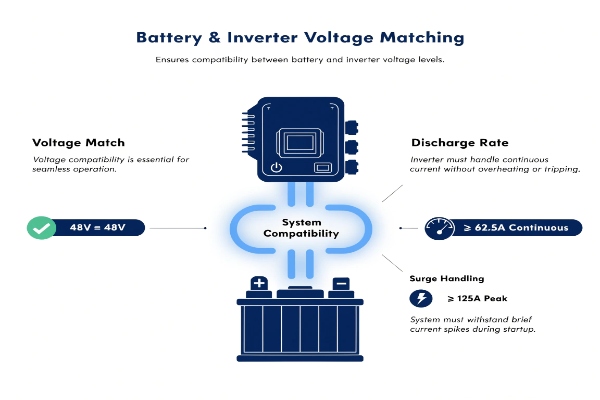
Let's examine the critical compatibility factors:
Key Compatibility Parameters
- Voltage Specifications
- Nominal voltage matching
- Operating voltage range
- Low voltage cutoff settings
- High voltage protection limits
- Charging voltage compatibility
Through our field testing, we've found that voltage mismatch is the most common cause of system incompatibility, leading to reduced efficiency or complete system failure.
- Current and Power Ratings
- Continuous discharge capability
- Peak surge current capacity
- C-rate requirements
- Protection thresholds
- Temperature derating factors
Our installations demonstrate that batteries must handle not just the inverter's rated power but also surge demands that can be 2-3 times higher during motor starts or inductive loads.
| Parameter | Inverter Requirement | Battery Must Provide |
|---|---|---|
| Voltage | 48V nominal | 48V system (typically 51.2V LFP) |
| Continuous Current | 3000W ÷ 48V = 62.5A | ≥62.5A continuous discharge |
| Surge Current | 6000W ÷ 48V = 125A | ≥125A peak discharge (5-10s) |
| Capacity | 3000Wh for 1hr runtime | ≥4500-6000Wh (1.5-2x buffer) |
What Size Battery to Run a 3000W Inverter?
This is one of the most frequently asked questions we receive from our customers planning power systems.
For a 3000W inverter, we recommend a battery capacity of 4500-6000Wh (approximately 90-120Ah at 48V). This 1.5-2x multiplier ensures the battery can handle surge loads without entering protection mode.
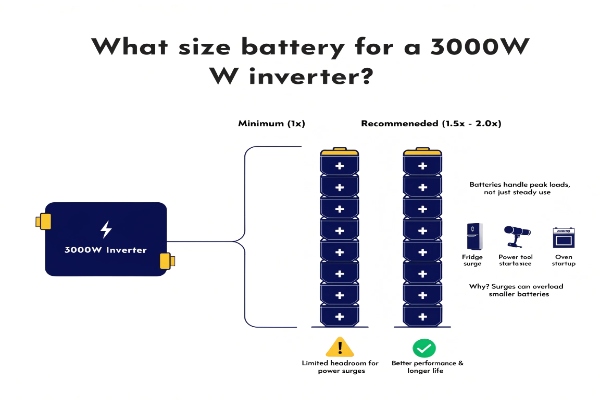
Let's break down the sizing calculation:
Sizing Calculation Framework
- Basic Capacity Calculation
- Continuous power requirement1
- Runtime expectations
- Depth of discharge limits
- Efficiency losses
- Safety margins
From our experience, the basic formula is: Battery Capacity (Wh) = Inverter Power (W) × Runtime (h) × 1.5 to 2.0. For a 3000W inverter running 1 hour, this means 4500-6000Wh minimum.
- Surge Capacity Considerations
- Peak power events
- Motor starting currents
- Protection threshold margins
- Temperature effects
- Battery aging factors
Our real-world testing shows that without this 1.5-2x buffer, batteries often trigger over-current protection during normal surge events like refrigerator compressor starts or power tool activation.
Practical Sizing Examples
| Application | Inverter Size | Minimum Battery | Recommended Battery | Reason |
|---|---|---|---|---|
| Light backup | 3000W | 5kWh (100Ah@48V) | 7.5kWh (150Ah@48V) | Occasional surge loads |
| Regular use | 3000W | 6kWh (120Ah@48V) | 10kWh (200Ah@48V) | Frequent high loads |
| Heavy duty | 3000W | 7.5kWh (150Ah@48V) | 12kWh (250Ah@48V) | Continuous heavy loads |
Does an Inverter Have to Match a Battery?
This question reveals a common misconception about system design that we address frequently with our customers.
While the inverter doesn't need to exactly match the battery capacity, proper sizing ratios are essential. Oversized batteries relative to the inverter improve performance and longevity, while undersized batteries cause protection trips and reduced lifespan.
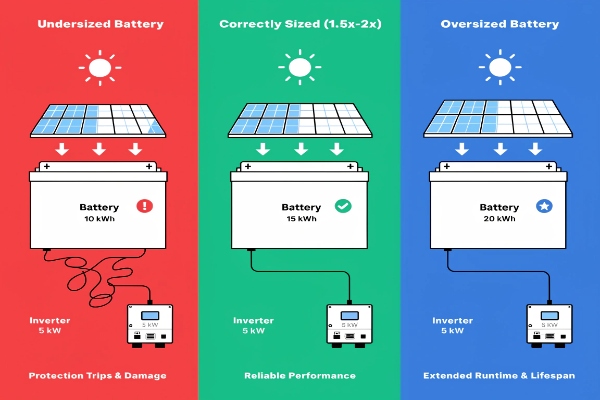
Let's examine the matching requirements:
Matching Requirements Analysis
- Critical Matching Points
- Voltage system compatibility
- Communication protocol alignment
- Protection coordination
- Charging parameters
- Physical connection standards
Our installation experience shows that modern lithium batteries with BMS systems require proper communication setup with inverters to prevent conflicts between battery and inverter protection systems.
- Flexibility in Sizing
- Battery bank expansion options
- Future load growth accommodation
- Parallel configuration possibilities
- System scalability
- Performance optimization
We've successfully implemented systems where battery capacity is 3-4 times the inverter rating for extended runtime applications, proving that matching is about meeting minimum requirements rather than exact ratios.
How Do You Size a Battery for an Inverter?
Drawing from hundreds of successful installations, we've developed a systematic approach to battery sizing.
Battery sizing requires calculating power needs, runtime requirements, surge capacity margins, and applying a 1.5-2x safety factor to prevent protection mode activation during normal operation.
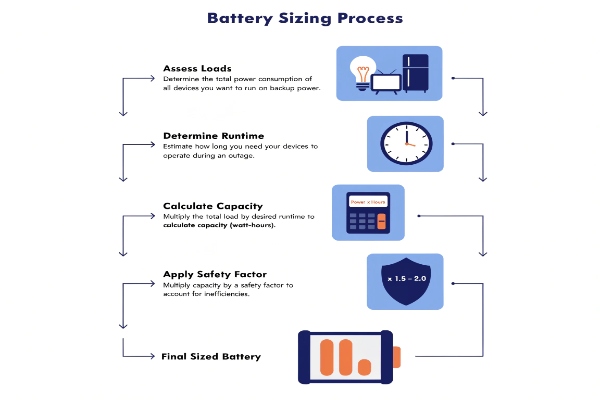
Let's outline the complete sizing process:
Comprehensive Sizing Methodology
- Step-by-Step Calculation Process
- Load assessment and profiling
- Runtime requirement determination
- Voltage system selection
- Capacity calculation with margins
- Discharge rate verification
Through our project experience, we've found that starting with a detailed load analysis prevents both undersizing and costly oversizing mistakes.
- Practical Sizing Factors
- Temperature compensation
- Aging degradation allowance
- DoD limitations
- Efficiency losses
- Future expansion planning
Our field data shows that batteries operating within the 1.5-2x capacity ratio maintain healthier state of charge ranges, experience less stress, and deliver significantly longer service life.
Real-World Sizing Formula
Basic Formula:
Battery Capacity (Ah) = [Inverter Power (W) × Runtime (h) × 1.5 to 2.0] ÷ [Battery Voltage (V) × DoD × Efficiency]
Example for 3000W, 48V system, 2hr runtime:
- Power requirement: 3000W × 2h = 6000Wh
- Safety factor: 6000Wh × 1.5 = 9000Wh
- With 80% DoD and 90% efficiency: 9000 ÷ (48 × 0.8 × 0.9) = 260Ah
This calculation ensures the battery never operates at extreme discharge rates that would trigger protection systems.
Conclusion
Properly matching battery size to inverter capacity requires understanding both continuous and surge power demands. Following the 1.5-2x capacity rule ensures reliable operation, prevents protection system trips, and extends battery lifespan in real-world applications.
-
Understanding continuous power requirements is crucial for accurate capacity calculations, ensuring your system meets operational needs. ↩